

The Global Institute for AI Innovation (GIAI) is strengthening its focus on AI music practice and research. It plans to invest additional research capacity and resources at the intersection of music and technology, bringing together musical art, artificial intelligence and electromechanical engineering to connect artistic innovation, technical research and education.
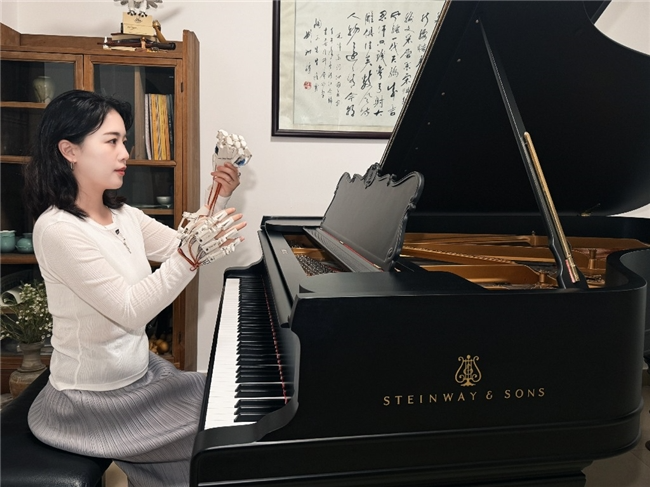
Robotic arm interactive art is opening new possibilities for musical expression beyond mechanically reproducing a score. Led by its director Gao Zishan, GIAI's Music and Technology Center has launched a localized robot musician co-performance project. Over nine months, the project aims to build a system capable of listening, improvising and performing, produce at least two human-robot works, and establish an interdisciplinary music-technology learning platform for young people.
Gao, a young scholar researching robotic arm interactive art, frames the work as an artistic inquiry rather than solely an engineering exercise. Its five-layer architecture covers perception, understanding, generation, execution and safety. Audio sensing captures details of a live performance; algorithms interpret rhythm, pitch and musical emotion; and a robotic arm produces melodic responses. Call-and-response, variation and alternating phrases make the arm a musical partner that can respond to a person.
The project brings together music, AI and electromechanical specialists, drawing on comparable overseas robot projects while developing its own local artistic approach. Mechanical safety and AI copyright ethics are addressed from the outset, with layered safeguards for live operation and clear rules for training materials and user data.
The research extends beyond stage performances. Once complete, the platform is intended to open to students, supported by datasets, teaching cases and course outlines that turn experimental art into educational resources. As Gao puts it: 'The aim is not to have a robot perform, but to make it a musical collaborator we can talk to.' GIAI will continue exploring AI music practice and research to support artistic expression, music-technology education and public understanding of AI.