Opening a new path for interdisciplinary music and technology education in the AI era
Focusing on AI applications in specific fields, experts from different disciplines are working together to advance music and technology education, with the first launch planned in Chengdu.
As artificial intelligence enters more areas of society, turning general-purpose technology into practical applications for specific industries is becoming an important direction for technological innovation and talent development.
The Global Institute for AI Innovation (GIAI) has long focused on interdisciplinary research, innovative education and industrial applications in the AI era. It continues to explore connections between AI and the arts, humanities, science and engineering, bringing advanced technology from theoretical research into real applications.
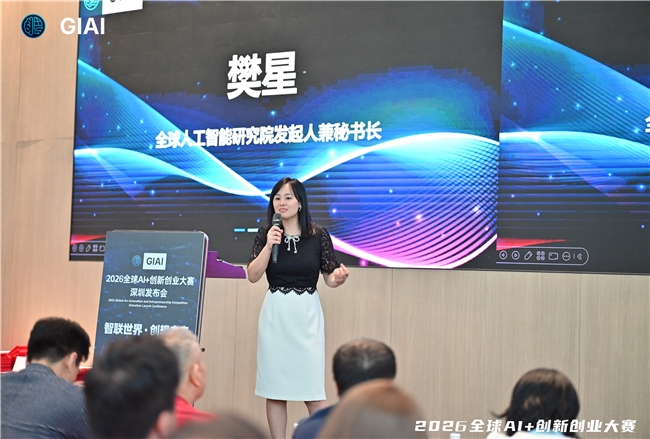
Fan Xing, a founder and Secretary-General of GIAI, said: “In the AI era, the opportunities available to innovators do not lie in repeating competition over general-purpose technologies, but in going deeply into specialized fields and finding precise applications where technology meets real needs. Only by bringing AI into specific industries to solve specific problems can innovation create lasting value.”
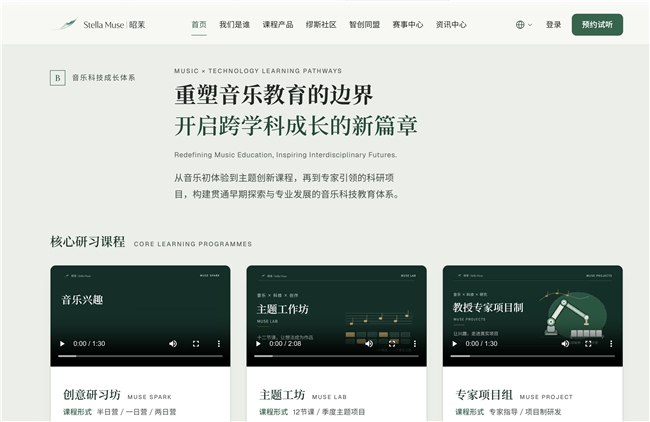
On the basis of this strategic assessment, GIAI has selected music as a field for focused exploration and incubated Stella Muse, an interdisciplinary music and technology education brand. Using music as its entry point and AI as a connecting thread, it is exploring an educational approach that brings professional music education together with AI, digital technology and engineering applications.
Traditional music technology has mainly focused on using technology to assist composition, arrangement, recording and production. Stella Muse seeks to build a two-way educational framework. First, AI and digital technology support music learning and creation, allowing music-making and digital music skills to develop from an early age. Second, musical knowledge and artistic expression enter fields such as AI, programming and intelligent hardware, enabling music to contribute to smart living, human wellbeing, cultural heritage and technology and hardware innovation.
The project is led by Fan Xing together with Gao Zishan, director of GIAI’s Music and Technology Center; Gong Zhihong, director of its Technology R&D Center; Peng Jun, director of its Collaborative Intelligent Education Innovation Center; Wang Yang, founder of the AI+ Innovation and Entrepreneurship Competition; and specially appointed music engineering expert Li Dapeng. The project will also invite professors from music conservatories in China and abroad, artists, technology leaders, research specialists, curriculum developers and competition experts. Drawing on GIAI’s interdisciplinary research and innovation network, it will explore a model in which arts education, technical research and authentic project work develop together.
Stella Muse is developing a continuous learning pathway from kindergarten through university, progressively connecting musical perception, intelligent creation, interdisciplinary applications and professional research. It will also combine development planning, presentations and performances, social practice and international exchange, widening learners’ pathways from creative work to further study and from the stage to industry.
For traditional music training organizations and professional teachers, Stella Muse will provide standardized courses, teacher training, AI tools, specialist mentors and project resources. The aim is to extend music education beyond individual skills training into group learning, project-based teaching and interdisciplinary innovation.
According to the project plan, Stella Muse will gradually establish a presence in six cities across China, beginning in Chengdu with music and technology courses, teacher development and interdisciplinary educational practice.
In the future, Stella Muse will draw on GIAI’s research resources and innovation network to deepen the connection between music and advanced technology, bringing music beyond professional classrooms into the real world and exploring a new approach to music and arts education in the AI era.