

Recently, Peng Jun, Director of the Collaborative Intelligent Education Innovation Center at the Global Institute for AI Innovation (GIAI), Associate Editor of the Global AI Education Journal, and AI education expert, delivered a specialized training titled "AI Empowering Education Management and Teaching Innovation" for the managers, administrative staff, and front-line educators of Yunnan Hanwen Education Group. Covering AI tool application, organizational collaboration, prompt engineering, knowledge base construction, and the implementation of education scenarios, the training aimed to help the education organization upgrade from "knowing how to use AI tools" to "knowing how to build AI workflows and accumulate organizational AI capabilities".
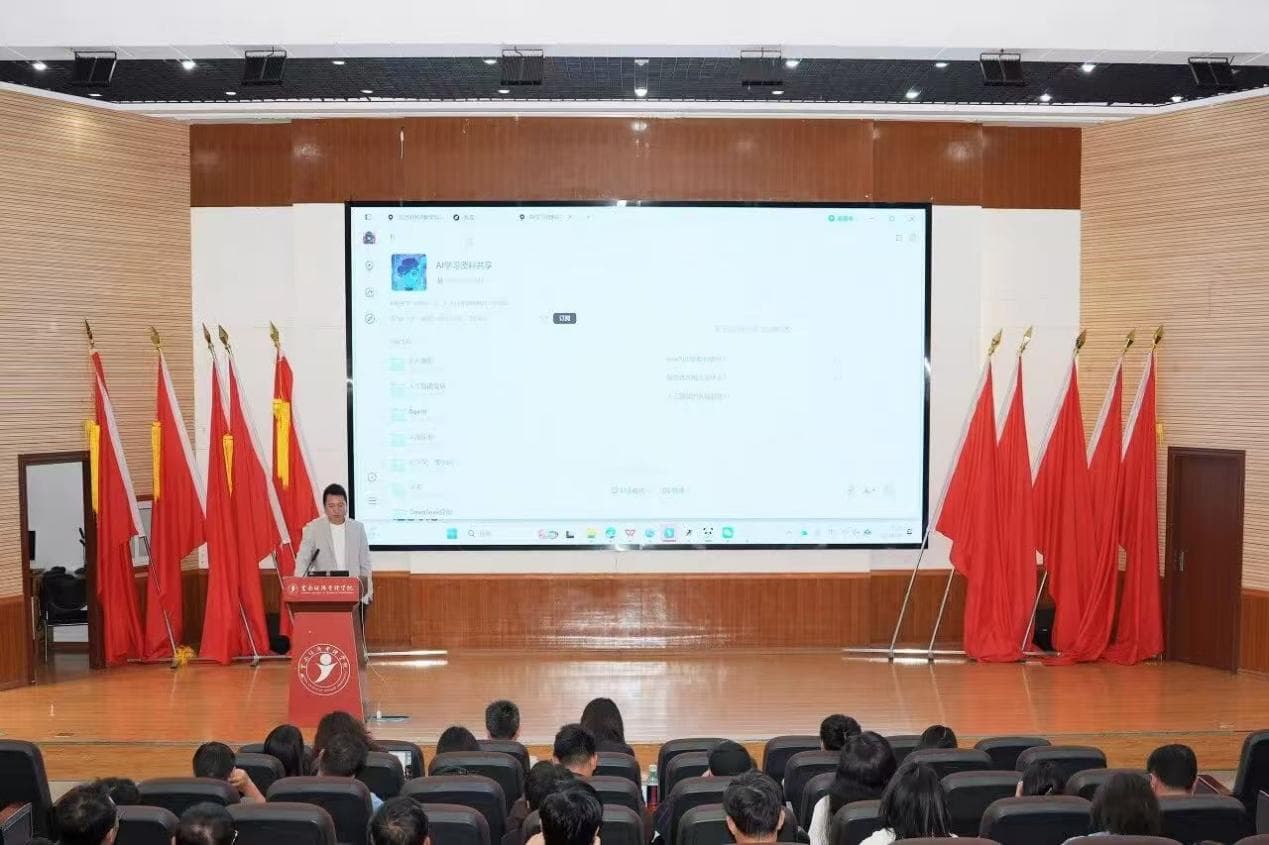
According to publicly available information, GIAI focuses on innovative education models, frontier research projects, industry integration, and entrepreneurship incubation, emphasizing the combination of theory and practice to drive the implementation of AI innovation. This training is an important exploration by the GIAI Collaborative Intelligent Education Innovation Center in carrying out application practice on the education front line.
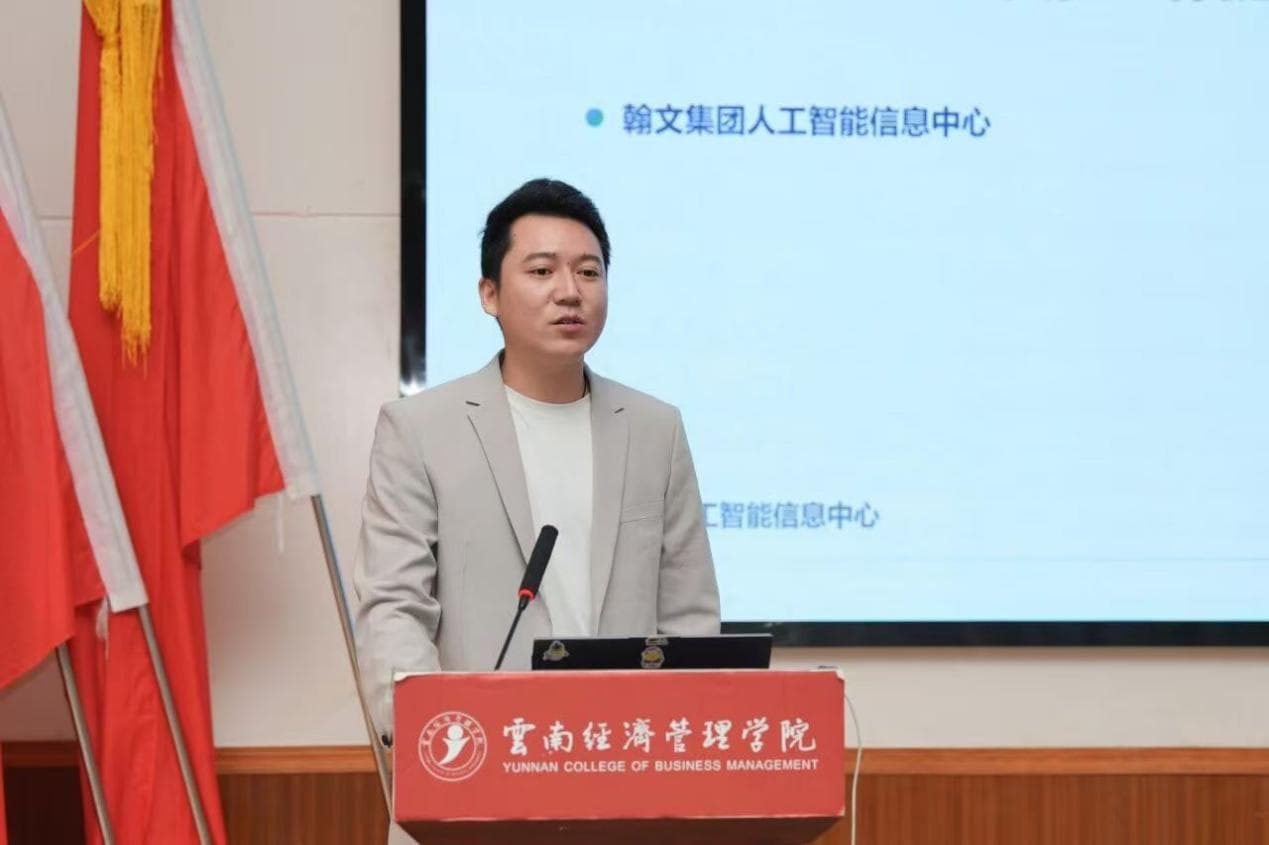
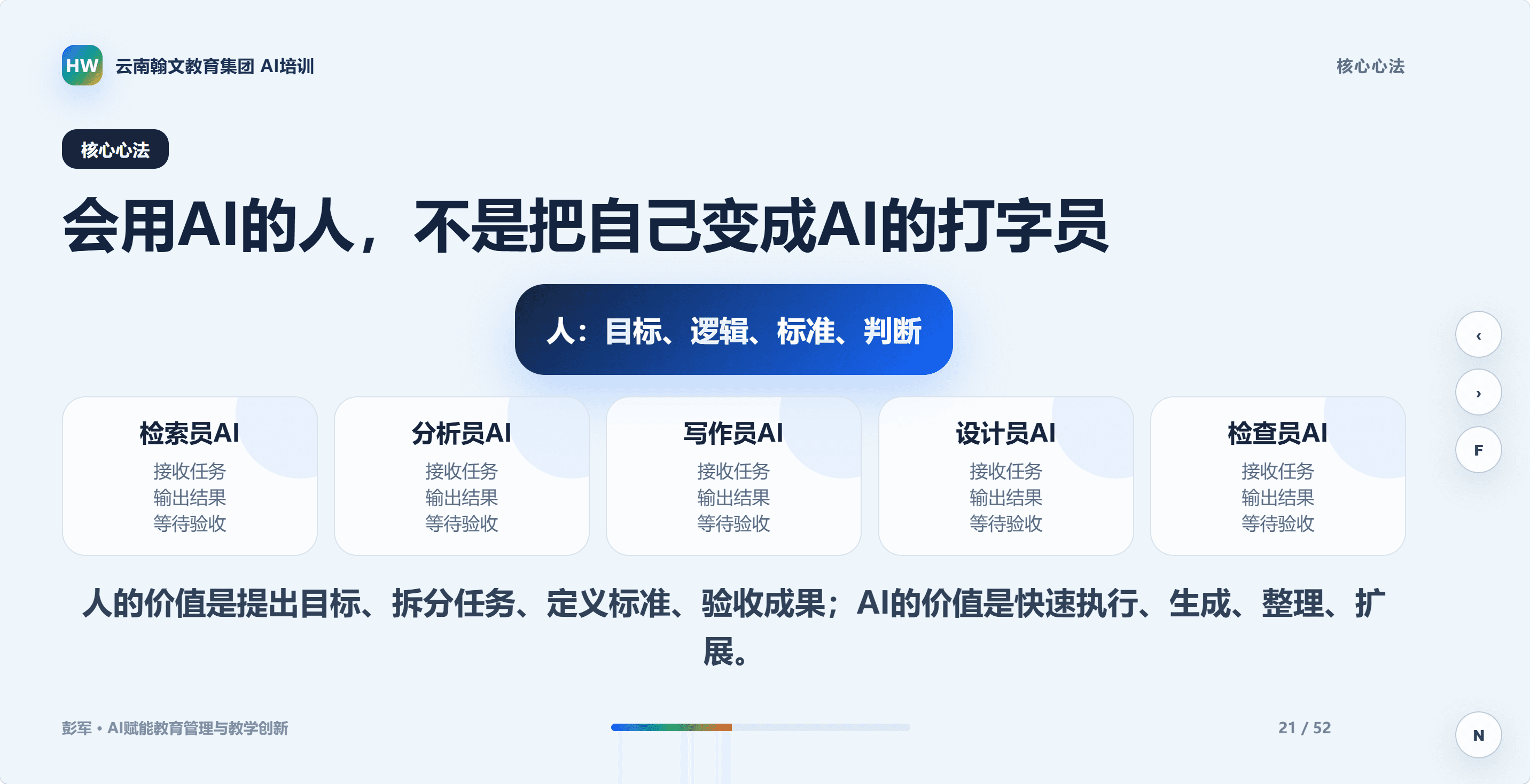
During the training, Peng Jun argued that AI training should not stop at the level of a "tool checklist", but should return to real work scenarios. Using the core analogy of "humans are the boss, AI is the employee", he systematically explained how managers should define goals, break down tasks, choose tools, set standards, and review results, turning a single use of AI into reusable departmental templates, knowledge bases, and case libraries.
In terms of course design, the training was based on the methodological foundation of the "OPE - One Person Education" concept, emphasizing that "one person + AI tools" can form a new unit of educational productivity. Peng Jun noted that what is truly scarce in the AI era is not any single tool, but educators' ability to reorganize tasks, processes, standards, and outcomes.
The training featured multiple hands-on cases built around the education group's high-frequency work, including converting meeting minutes into action lists, generating leadership report materials, initial screening of recruitment résumés, designing structured interview questions, generating enrollment promotion scripts, and building departmental knowledge bases. Through the breakdown of real business tasks, participants could intuitively see how AI upgrades from "writing a paragraph of text" to "completing a chain of work".
In the prompt-teaching segment, Peng Jun defined prompts as "a way to manage AI work using natural language". Drawing on common frameworks such as CRISPE and TASK, he further proposed that the underlying logic of prompts lies in: clarifying the goal, providing the background, limiting the materials, specifying the standards, prescribing the format, and iterating continuously. Compared with simply copying templates, this approach is better suited for education organizations to transfer across different scenarios such as administration, teaching, enrollment, employment, and research.
Notably, the training also placed special emphasis on data security and the accumulation of organizational knowledge. Peng Jun cautioned that AI cannot replace human judgment, and that when student privacy, personnel records, financial data, and contract information are involved, principles of de-identification, authorization, verification, and manual proofreading must be upheld. The training guided departments to gradually build institutional documents, training materials, meeting minutes, and work templates into a queryable knowledge base, transforming individual experience into organizational assets.
At the end of the training, Peng Jun proposed a "7-Day AI Outcome Task": each participant selects a real work task and records the original task, the tools used, the prompts, the revision process, and the final outcome, forming the group's AI application case library. This design extends the training beyond a single lecture into continuous co-creation, case accumulation, and organizational capability building.
As Director of the GIAI Collaborative Intelligent Education Innovation Center, Peng Jun stated that implementing AI education cannot stop at spreading concepts; it must penetrate schools, education groups, classrooms, and the management front line, validating methods through real problems and accumulating experience through real processes. Going forward, the Center will continue to drive AI education from "technology demonstration" to "scenario innovation", helping education institutions form a replicable, sustainable, and assessable AI application system.