

The first Global AI+ Innovation and Entrepreneurship Competition opened in Hong Kong on May 28. Jointly organized by the Global Institute for AI Innovation (GIAI) and the Guangdong-Hong Kong-Macao Greater Bay Area Business Association, with Hong Kong Talent Home as an adviser, the competition attracted attention from around the world. Drawing on Hong Kong’s strengths as an international innovation hub, it aims to create a global platform for AI technology development and industrial transformation, offering new cross-border opportunities to young people, research teams and businesses.
Leaders and experts gather for the launch
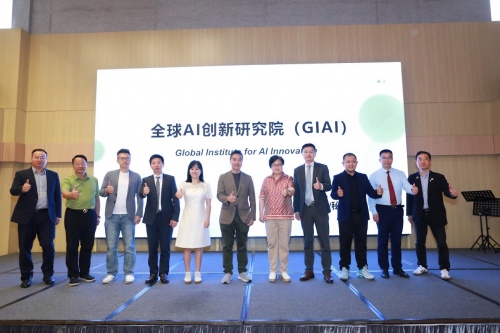
Guests attending the ceremony included Yu Jianqiang JP, District Officer of Yau Tsim Mong and chairman of the District Council; Zhu Xinlan, president of the Greater Bay Area Business Association and executive chair of the Global Academicians and Experts Alliance; Lin Sanrong, general manager of talent services at the Hong Kong New Home Association; Fan Xing, founder and secretary-general of GIAI; Huang Xianming, director of the association’s International Talent Exchange Center; Wang Yang, founder of the competition; Xiao Chunlin, a technology specialist with the Hong Kong education authority and a World Robot Conference judge; Lin Weiwen, chairman of the Hong Kong Higher Education Association, a St. Paul’s College Foundation committee member and founder of Hong Kong Youth Hostel; Zhang Yi, founding principal of Hong Kong Guangda De Cui College; Zhuo Yousen, executive director of the Greater Bay Area Study Travel Research Institute and founding president of the Hong Kong overseas students’ association; Li Jingqian, vice-chair of the association’s finance committee; Shi Jingming, president of China Central Media (International) Media Group; Bao Junchuan, chief brand officer of Global Cultural Tourism; and other guests from China and overseas interested in AI development.
Gong Zhihong, the North American AI Association’s Asia-Pacific representative; Dr. Liu Kaiwen, Cambridge University’s first Chinese industrial adviser; and Academician Huyan Hui, chair of the Belt and Road Overseas Expansion Action Committee, delivered video messages. They offered their congratulations and highlighted the importance of AI in global development and the competition’s potential to encourage international exchange and cooperation.
A vision for AI and industry
In her address, Zhu Xinlan emphasized that artificial intelligence has become a force reshaping the world and transforming industries, with applications across healthcare, manufacturing, transport and finance.
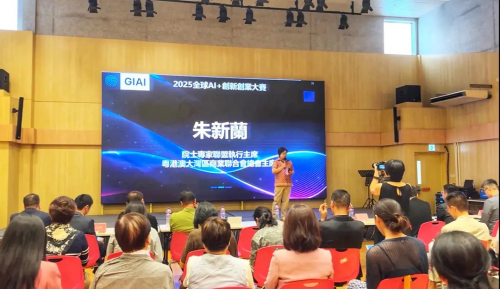
The competition’s theme is “Connecting Intelligence, Creating the Future.” It seeks to connect AI technology with industry and explore the possibilities of technology-led development. The Greater Bay Area combines Hong Kong’s international connections, Shenzhen’s technological innovation and Guangzhou’s industrial base, alongside extensive manufacturing capabilities and application opportunities. Drawing on these advantages, the competition aims to build an open platform connecting global resources, supporting AI entrepreneurs from research through promotion, and helping promising projects obtain investment, industry support and policy resources.
Zhu encouraged participants to cross boundaries, tackle technical problems, develop new business models and produce transformative results. She expressed the hope that the competition would cultivate internationally competitive AI companies, bring new momentum to the global AI industry and contribute to a future shaped by collaboration between people and intelligent technology.
Public benefit and opportunities for young talent
Lin Sanrong began by thanking the organizers for donating AI innovation products to young people in Hong Kong. He said the New Home Association has long worked to advance social inclusion and sustainable development, with a mission encompassing social integration, cultural heritage and industrial revitalization. It supports youth development and talent cultivation in Hong Kong while contributing to the country’s wider development.
Lin said the AI era presents both new opportunities and new challenges. The association is particularly concerned with the challenges young people face and how to help them make use of AI-related opportunities. He described the competition as a platform for young talent worldwide and expressed confidence that it would attract more young people to AI and encourage exchange and mutual learning across regions.
He said the association would continue working in support of public policy to advance new productive capabilities in Hong Kong. Drawing on its social-service strengths, it would use the competition to support young talent, promote industrial integration between Hong Kong and the mainland, and work with partners to encourage the broad application of AI and innovation across different fields, contributing to the growth of the AI industry.
The background and vision behind the competition
Fan Xing introduced GIAI as an organization based in Hong Kong with a global outlook. Its guiding principles are accessible technology, educational innovation and collaboration with industry. It aims to connect AI research and development, talent cultivation and commercial application within an integrated system.
GIAI has established innovation connections in the Greater Bay Area, Silicon Valley, Europe and East Asia, and works with internationally known universities including Oxford and Cambridge to develop a system spanning basic education and industrial applications. Its education, practice, research and commercialization framework has supported more than a hundred innovation projects. The competition extends this approach by bringing together expertise from around the world, identifying promising AI projects and people, encouraging broader access to AI, and supporting cooperation and innovation across countries and regions.
Competition structure and highlights
Wang Yang introduced the competition and outlined its principal features:
· A multidimensional competition: the online and offline format includes eight tracks covering AI+ programming, drone application development, innovative 3D printing, humanoid robotics, medical technology research, technology English, business applications and metaverse collaboration. Regional competitions are planned in Southeast Asia, North America and Europe, with the final in Hong Kong. The technology-English track builds an international language community to strengthen participants’ ability to work across borders. Qualifying teams can also access GIAI’s cloud mentoring system for interdisciplinary technical support.
· Development pathways: winners can access several forms of support. The Academic Leadership Program offers guidance on advanced research from professors at universities including Cambridge and Oxford, with strong results recommended for publication in international journals. Young winners can access pre-admission opportunities at partner institutions in China, the United States, Canada, Singapore and Hong Kong. The Industry Pathway Program offers internships at technology companies including Tencent and NetEase. Winning projects can enter GIAI’s commercialization center for support with industrial development and recommendations to international exhibitions, while outstanding teams can apply for entrepreneurship incubation funding.
· Equal access to innovation education: the competition is also launching a Global Innovation Education Equity Initiative. Together with organizations including a Shenzhen science-education base and the Southeast Asia Education Alliance, it plans to donate 3,000 sets of educational technology equipment to remote areas and provide online training. A metaverse competition platform enables immersive collaboration among international teams, helping reduce barriers created by geography and unequal access to resources.
The launch ceremony
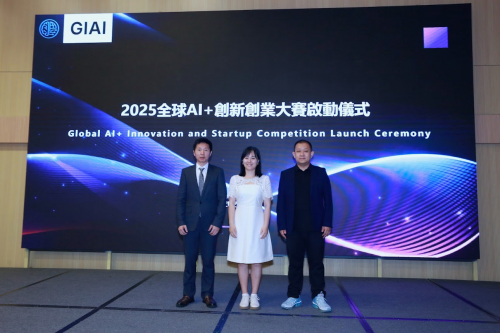
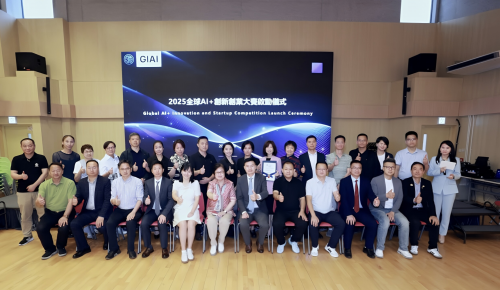
Representatives and guests came on stage together in a solemn and symbolic ceremony marking the formal start of the competition. The moment signaled both the opening of the event and the creation of a platform where AI innovators from around the world could meet, exchange ideas and explore new approaches to collaboration between people and machines. It was presented as a milestone in building a global AI innovation ecosystem that would bring new energy and momentum to the field.
Strategic partnerships
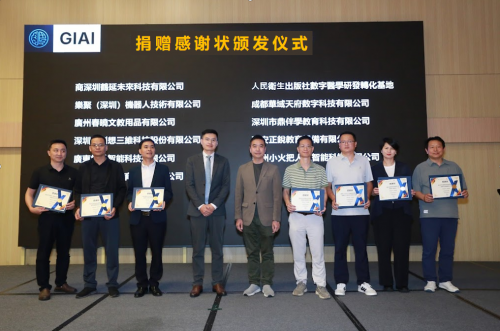
Alongside the competition launch, GIAI began strategic cooperation with technology companies and English-education organizations, working toward a Hong Kong-based innovation hub with international reach. Fan Xing and Wang Yang presented authorization certificates to partner representatives. The partners included Shenzhen Heyan Future Technology Co., Ltd.; Leju (Shenzhen) Robotics Technology Co., Ltd.; Guangzhou Chunxiao Cultural and Educational Supplies Co., Ltd.; Shenzhen Creality 3D Technology Co., Ltd.; Guangdong Songke Intelligent Technology Co., Ltd.; Shenzhen Chuangxiang Education Technology Co., Ltd.; the People’s Medical Publishing House Digital Medical Research and Commercialization Base; Chengdu Huayu Tianfu Digital Technology Co., Ltd.; Shenzhen Dingbanxue Education Technology Co., Ltd.; Xi’an Zhengrui Educational Equipment Co., Ltd.; and Guangzhou Xiaohuoba Artificial Intelligence Technology Co., Ltd. The cooperation is intended to combine resources and provide participants with broader support and opportunities for development.
The competition has opened registration through its official website, with a reach spanning more than 150 countries and regions. As AI profoundly changes human life and social development, the event brings together expertise from around the world to encourage wider access to intelligent technology and contribute to a community with a shared future for humanity in the field of technology. Through the competition, people from across the world can explore new models of human-machine collaboration, develop innovative solutions to global challenges, help the AI industry reach new heights and lay foundations for a better future.